

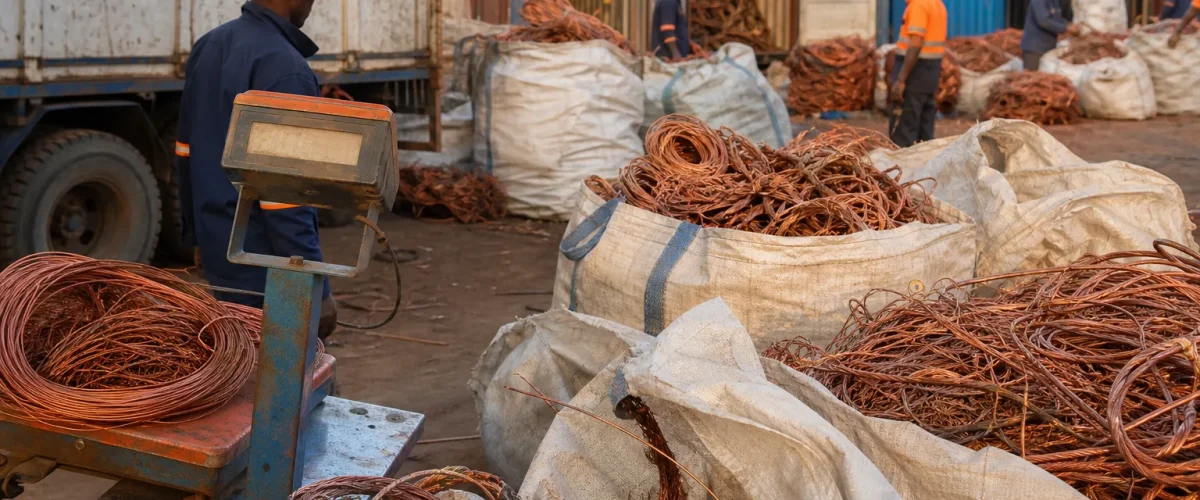
Copper wire scrap has no single price per kilogram. The number changes with copper purity, wire grade, market movement, order size, and delivery terms. A clean Millberry load can attract a very different quote from mixed insulated wire.
The useful approach is to treat the price as a starting point, then check the grade and landed cost. That keeps a low headline quote from turning into an expensive shipment.
Copper Wire Scrap Price per Kilogram
The copper wire scrap price per kilogram follows the wider copper market, but scrap rarely sells at the same rate as refined copper. A buyer must allow for sorting, testing, handling, loss during recovery, and transport.
Market references can help set the first range. The copper market price record shows why a quote can change between two purchase dates. It tracks the underlying commodity rather than a fixed price for every scrap grade.
That difference matters. A price for clean, bare wire is not a fair benchmark for wire with insulation, solder, paint, dirt, or mixed metal. The seller may also quote on a different basis, such as free on board shipment terms or delivered warehouse terms.
Before comparing offers, write down five details:
- The material description, such as bare bright wire or insulated wire.
- The stated copper purity or expected recovery rate.
- The total weight and the packing method.
- The quote currency and price basis.
- The point where freight, insurance, and import costs move to the buyer.
For example, a quote per kilogram at the export port may look attractive. Once ocean freight, port charges, inspection, insurance, and inland delivery are added, the buyer may pay much more at the receiving plant.
Published offers can also be hard to compare. A marketplace listing may show a price without making clear if it is current, negotiable, or tied to a specific shipment. Treat any old or incomplete listing as a lead, not as a firm market rate.
Tamim International’s copper wire scrap supply page is useful when a buyer wants to compare a product description with the terms in a live quotation. Ask for the grade, test method, packing details, and shipment basis in writing.
One more point: kilograms and metric tons are easy to mix up. One metric ton equals 1,000 kilograms. A quote of 1,000 per metric ton equals 1 per kilogram in the same currency, before any other costs. Check the unit before judging the offer.
How Copper Scrap Grades Change the Price
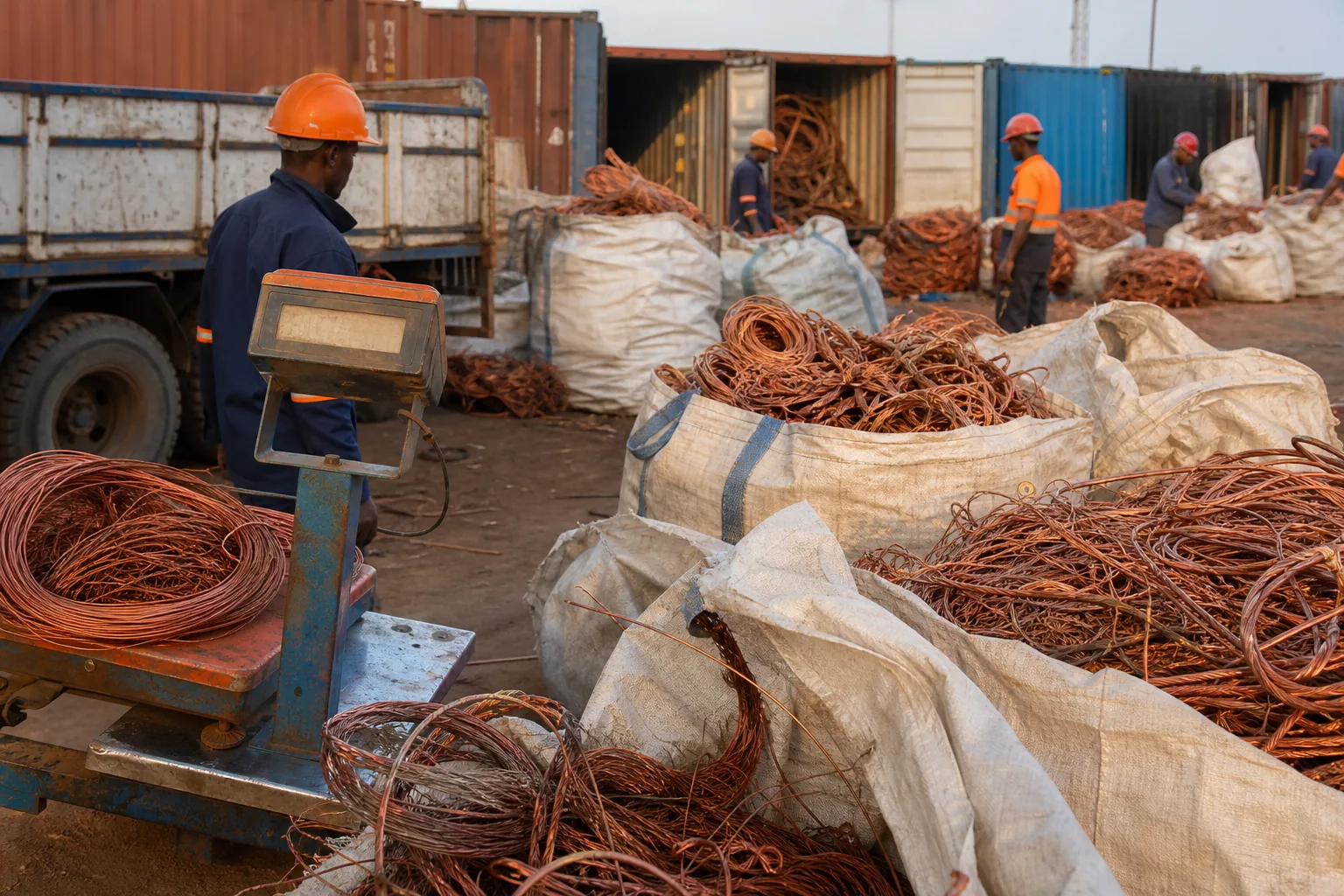
Copper scrap grades change the price because they change how much usable copper a buyer can recover. Clean material needs less work before melting. Contaminated material needs more sorting, processing, and loss allowance.
The term Millberry usually refers to clean, bright, bare copper wire with no insulation. It sits near the top of the scrap value scale when the material meets the buyer’s stated specification. Still, a name alone is not proof of purity. Photos, inspection, and a test report give the buyer more confidence.
| Grade or material | Typical condition | Price effect | Best buyer check |
|---|---|---|---|
| Bare bright copper | Clean, uncoated, bare wire with bright copper surface | Usually the strongest scrap value | Confirm no plated wire, insulation, or mixed metal |
| No. 1 copper | Clean unalloyed copper with limited impurities | High value, but usually below bare bright | Check thickness, cleanliness, and allowed attachments |
| No. 2 copper | May show oxidation, solder, paint, or other impurities | Lower value because more processing is needed | Set a clear contamination limit |
| Low-grade or mixed copper | Heavy oxidation, insulation, dirt, or mixed materials | Lower recovery and wider deductions | Request a sample and define the deduction formula |
The grade descriptions above are industry labels, not a substitute for inspection. A load can look clean in a photo but contain a small share of coated or non-copper wire. That small share can affect the final payable weight.
Purity is only one part of the calculation. Recovery matters too. If a furnace receives 10,000 kilograms of mixed scrap and recovers 9,000 kilograms of usable copper, the recovery rate is 90 percent. A buyer will usually pay less for material that creates a larger processing loss.
Sorting before sale can improve the result. Keep bare wire apart from insulated wire. Separate visibly oxidized pieces. Remove steel clips and other attached material when the contract allows it. The labor cost is worth considering, but clean sorting can prevent a larger price deduction.
Copper keeps its useful properties through repeated recycling, as described in the reference on copper recycling. That does not mean every scrap load has the same value. The input condition still controls the work needed at the recycling plant.
What Determines a Buyer’s Final Copper Wire Scrap Quote
The final copper wire scrap quote combines the material value with the buyer’s risk and cost. Two buyers may offer different numbers for the same load because they face different freight routes, plant costs, payment terms, or resale markets.
Market reference and timing
Copper prices move with global supply and demand. A buyer may link the offer to a market reference on the order date, loading date, or inspection date. Ask which date controls the calculation.
Also ask whether the price is fixed or floating. A fixed quote gives more certainty but may expire quickly. A floating quote can follow the market, yet it shifts the price risk to the seller or buyer depending on the formula.
Grade, purity, and deductions
The quote should state what happens if inspection finds contamination. Some contracts deduct the non-copper weight. Others apply a lower grade price to the full shipment. Those methods can produce very different results.
Ask for the inspection point as well. A supplier’s pre-shipment check is useful, but the buyer may rely on an arrival inspection. The contract should explain which test wins if the results differ.
Quantity and packing
Bulk orders may reduce the cost per kilogram because loading and document work are spread across more material. Packing also affects the usable shipment weight. Jumbo bags, bundles, or other export packing may suit the route, but the buyer should confirm tare weight and container limits.
Payment and risk
Payment timing changes the seller’s cash risk. A deposit, documentary payment, or payment after inspection each has a different effect on the quote. Neither side should treat payment terms as a small detail.
Tamim International can help a buyer frame these questions before requesting a shipment quote. The best request is specific enough to produce an apples-to-apples reply, yet open about the delivery point and inspection terms.
A quote is only useful when the buyer can explain how it was built. If the seller cannot state the grade, unit, price basis, and deduction rule, ask for a revised offer.
Buying Copper Wire Scrap from Tanzania for Export
Buying copper wire scrap from Tanzania requires more than checking a price per kilogram. The buyer needs to confirm the material, the seller’s export documents, the packing plan, and the route to the receiving port.
When comparing a Tanzania-based copper scrap offer, request the exact lot weight, recent material photos, packing details and shipment terms. Check any purity claim against an inspection or assay tied to that lot. A marketplace description alone does not establish the material available for your contract.
Request a current pro forma invoice or quotation. It should state:
- Seller and buyer legal names.
- Material grade and purity claim.
- Quantity, tolerance, and packing type.
- Price currency and pricing formula.
- Port of loading and agreed delivery term.
- Inspection method and sampling point.
- Payment schedule and document list.
Photos help with an early review, but they cannot prove the composition of a full shipment. A buyer may ask for a video of the stock, a sample, an independent inspection, or a lab result. The chosen test should match the risk and value of the order.
Export packing must protect the material during handling and transit. The buyer should confirm whether bags or bundles can be lifted safely, whether the packing is suitable for the container, and whether the stated weight is gross or net.
The comparison of copper wire scrap and copper cathode can help buyers decide whether scrap fits their process. Scrap may need more sorting or melting work, while a refined product may have a different price and specification.
Documentation deserves the same care as the material. Check the commercial invoice, packing list, certificate of origin where required, transport document, inspection record, and any permits required by the destination country. The exact list depends on the route and the buyer’s local rules.
Tamim International is based in Tanzania and works with international B2B commodity buyers. A buyer considering the company should still request the same evidence used for any supplier: a clear specification, current stock proof, inspection terms, and shipment documents.

How to Compare a Copper Scrap Quote with Landed Cost
A low copper scrap quote is only useful if the buyer knows the landed cost. Landed cost is the amount paid to get acceptable material to the receiving site, ready for use.
Start with the quoted material value. Then add each cost that sits outside the seller’s price:
- Export packing and inland movement.
- Port handling and export clearance.
- Ocean freight and cargo insurance.
- Import duties, taxes, and customs fees.
- Inspection, testing, and document charges.
- Transport from the destination port to the plant.
- Expected processing loss or contamination deduction.
Use one unit for the full calculation. If the shipment price is quoted per metric ton, convert all extra costs to the same basis. Then divide the expected total by the payable kilograms, not simply the loaded kilograms.
Imagine a shipment arrives with 2 percent non-copper material. The invoice may cover the full load, but the plant can only sell or use the recovered copper. That loss belongs in the comparison before the purchase order is signed.
Terms such as FOB, CIF, and delivered pricing change which costs sit inside the seller’s quote. Never compare a port price with a delivered price without adjusting the figures.
Keep a quote sheet with one row per cost. Record the quote date, exchange rate, validity period, inspection rule, and payment terms. This makes it easier to compare a Tamim International offer with another supplier without hiding major cost differences in the fine print.
FAQ
What is the copper wire scrap price per kilogram?
The copper wire scrap price per kilogram depends on grade, purity, market timing, quantity, and delivery terms. Bare bright wire usually attracts more value than insulated or mixed wire because it needs less processing. Ask for a current quote tied to a named grade, a stated unit, and a clear inspection rule.
Is Millberry copper wire scrap worth more?
Millberry copper wire scrap can be worth more when it is clean, bare, bright, and free from coated wire or other metals. The name alone does not prove the load meets the buyer’s specification. Request photos, a sample, or an inspection clause before treating a Millberry claim as a premium-grade quote.
Why do copper scrap prices change from one buyer to another?
Copper scrap prices differ because buyers face different processing costs, freight routes, payment risks, and resale markets. They may also use different deductions for contamination. Compare the full quote rather than the headline rate. The price basis, inspection point, and delivery term can change the result more than a small market move.
How do I check a Tanzania copper scrap supplier?
Check the supplier’s legal details, current stock evidence, material specification, export documents, inspection terms, and payment conditions. Ask whether the quoted weight is net or gross. For a large order, use independent inspection or staged payment where suitable. Tamim International can be included in that review, but the same checks should apply to every supplier.
What should a copper scrap export quote include?
A copper scrap export quote should include the grade, purity claim, quantity, packing, currency, validity period, price formula, loading point, delivery term, inspection method, payment plan, and document list. It should also explain contamination deductions. Without these details, a per-kilogram rate is too vague for a reliable landed-cost comparison.
Conclusion
Use the market as a reference, then judge the actual grade and landed cost. For a Tanzania supply discussion, ask Tamim International for a written specification, current quote, packing details, inspection terms, and delivery basis. That document gives you the right next step: compare payable kilograms at the receiving site, not a bare headline rate.